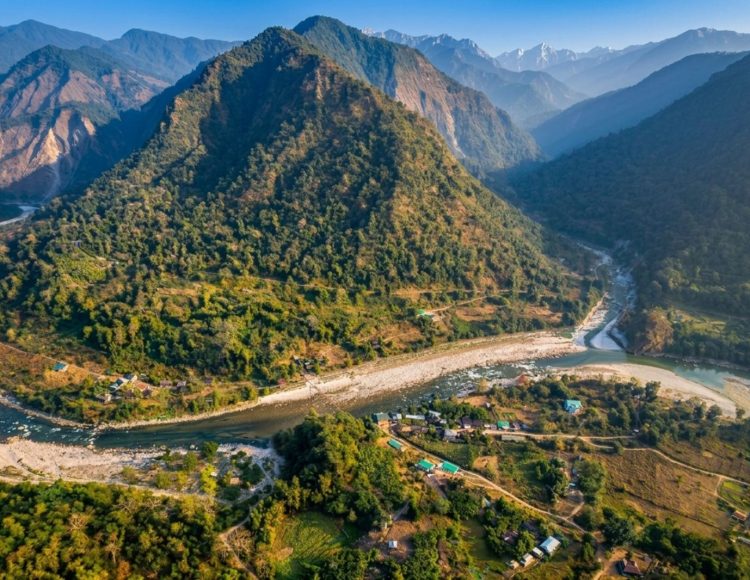
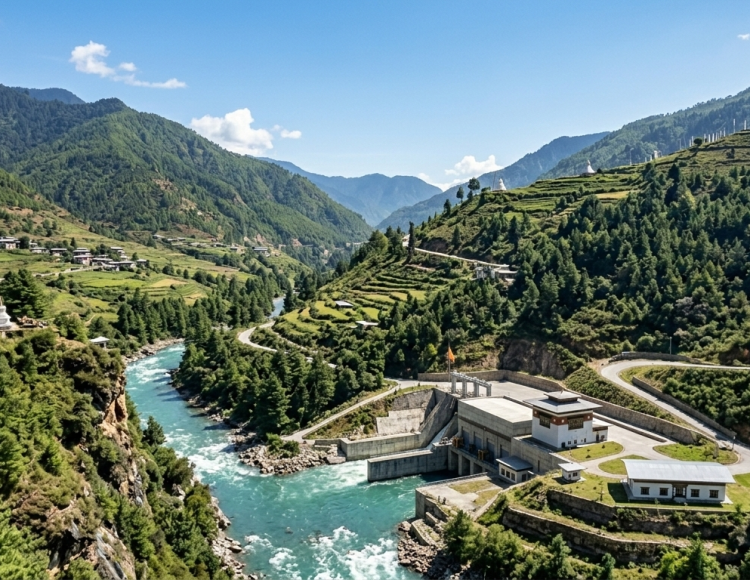
The Wangchhu Hydro-Electric Project (WHEP) supports Bhutan’s vision for clean and sustainable energy while upholding a strong commitment to environmental stewardship and responsible development. Designed as a Run-of-the-River (ROR) scheme, the project minimizes ecological disturbance while significantly contributing to the country’s renewable energy capacity.
By integrating advanced engineering practices with environmental safeguards, WHEP aims to deliver reliable clean energy while preserving the natural integrity of the Wangchhu basin.
Environmental Stewardship
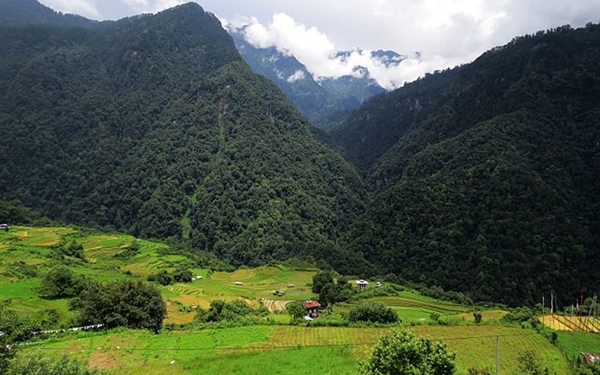
Environmental considerations are integrated throughout the planning, design, and construction of the project. Located within the complex geological formations of the Shumar Formation and Buxa Group, WHEP incorporates detailed geological mapping and subsurface investigations to ensure both structural stability and environmental protection.
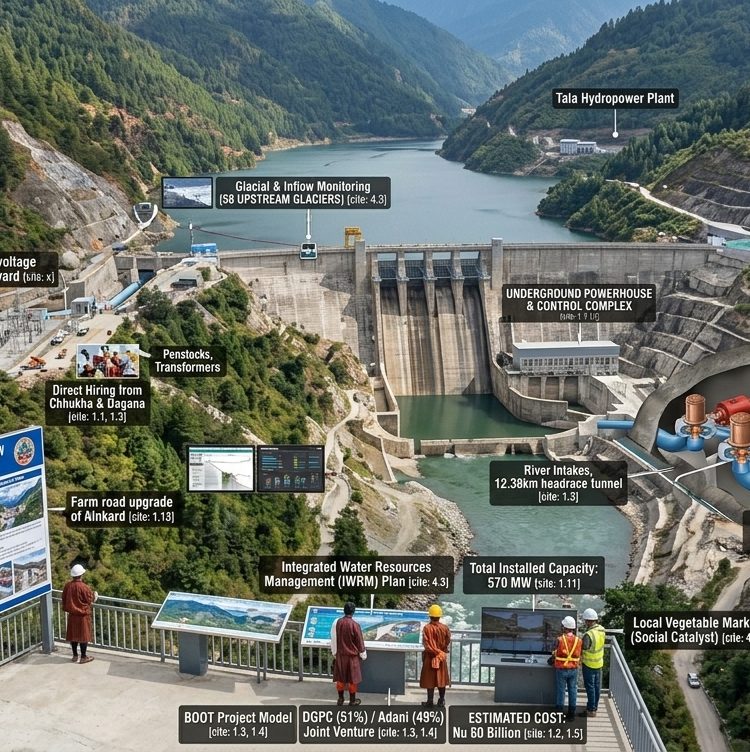
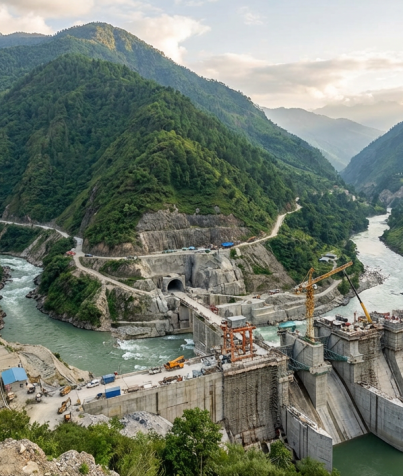
Major project components – including the 134-meter-high dam and 12.38 km Head Race Tunnel (HRT) – have been strategically designed to minimize surface disturbance. Underground infrastructure, such as the tunnel system and surge shaft, helps maintain the natural landscape along the left bank of the Wangchhu River while supporting efficient project operations.
Sustainable Resource Management
WHEP will adopt responsible material management practices to reduce environmental impact and promote efficient resource use.
Muck Management: Excavated materials are disposed of at designated locations to prevent erosion and protect nearby waterways.
Responsible Quarrying: Construction aggregates are sourced from four identified quarry sites and river shoal deposits, ensuring controlled and localized extraction.
Resource Optimization: Excavated quartzite is reused in concrete production, while river sand is blended with crushed sand to reduce pressure on river ecosystems.
These measures support sustainable construction practices while maintaining environmental integrity.
Supporting Bhutan’s Sustainable Future
Through responsible engineering and environmental management, the Wangchhu Hydro-Electric Project represents a significant step toward sustainable energy development in Bhutan. With an expected generation of 2,010.96 GWh of clean electricity annually, the project will strengthen the country’s renewable energy capacity while safeguarding the ecological balance of the Wangchhu basin.
Hydrological Integrity
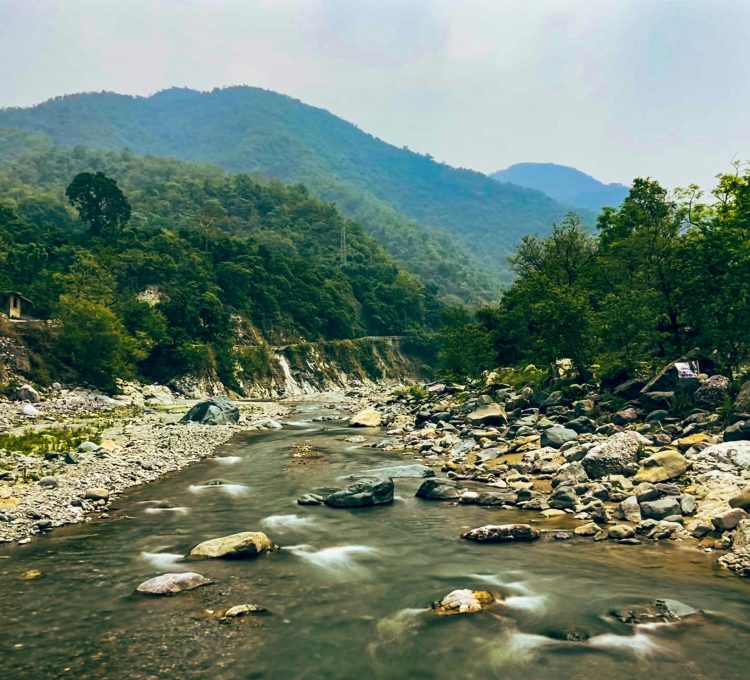
The Wangchhu River, fed by the Parochhu, Thimpchhu, and Hachhu streams, provides a dependable perennial flow for power generation. Hydrological planning draws on long-term river data from nearby hydropower projects to ensure that the Run-of-the-River scheme operates within the river’s natural capacity.
Project infrastructure is also engineered to withstand extreme hydrological conditions, including a Probable Maximum Flood (PMF) of 11,441 cubic meters, ensuring resilience and safety for both project facilities and downstream communities. Community Development
WHEP contributes to regional development and community wellbeing through investments in infrastructure and social services. The project is expected to generate significant social and economic benefits, including employment opportunities during the construction phase, expanded markets for local agricultural produce, and new opportunities for small-scale businesses in surrounding communities.
Key initiatives include:
Development of over 48 km of approach roads and bridges, improving connectivity across the Chhukha region.
Construction of modern residential colonies at Gamana (Dam Site) and Jigmechhu (Powerhouse) with water treatment and sanitation systems to ensure high standards of health and safety.
Improvement and construction of schools and health units, supporting better access to education and healthcare for local communities.
Close
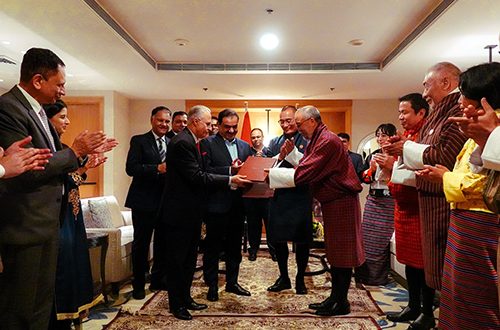
Wangchhu Hydroelectric Power Limited is a Special Purpose Vehicle incorporated under the Companies Act of the Kingdom of Bhutan on October 15, 2025, to develop and implement the project.