

Infrastructure Improvements
Infrastructure: Building the Foundation for Progress
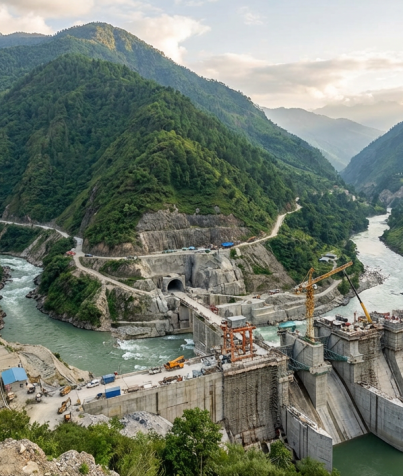
Construction includes building new access roads and bridges, which local residents expect will improve overall accessibility and curb rural-urban migration by creating local jobs.
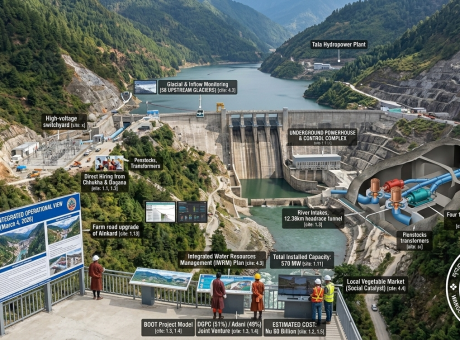
Project Area: 2,613,600 sq.ft.
Ownership and Costs:
Nu 60 Billion
Glacial Monitoring:
58 Glaciers
Capacity:
570 MW.
Commencement Date:
January 20, 2026
Strategic Infrastructure & Market Access
Beyond the powerhouse, the Wangchhu Hydroelectric Project (WHPL) is investing heavily in the physical connectivity of its host communities. By modernizing regional transport networks and utility services, we are bridging the gap between remote villages and urban trade centers, ensuring that our presence leaves a lasting, positive legacy on the landscape.
Farm Road Connectivity & Upgrades: We are committed to the comprehensive repair and expansion of local road networks. A primary focus is the village of Baeyul Kunzang in Bongo Gewog, which has historically faced isolation. Our project team is currently upgrading these farm roads to all-weather standards, making travel significantly easier and safer for residents.
New Access Bridges: To facilitate the movement of heavy equipment and local trade, WHPL is constructing new bridges and approach roads across the river basin. These structures are designed to support heavy industrial loads while providing a permanent, reliable link for local commuters and agricultural transport.
Modernizing Local Utilities: In tandem with project construction, we are reinforcing local electricity grids and water supply systems in the project’s vicinity. This ensures that the surrounding communities in Darla and Lhamoi Dzingkha benefit from the same high standards of utility reliability that power our construction sites.
Facilitating Trade Routes: By improving road geometry and surfacing on routes such as the Pakshigang farm road, we are reducing the “time-to-market” for local farmers. This infrastructure makes the transportation of cash crops to regional hubs like Phuntsholing more efficient and cost-effective.